

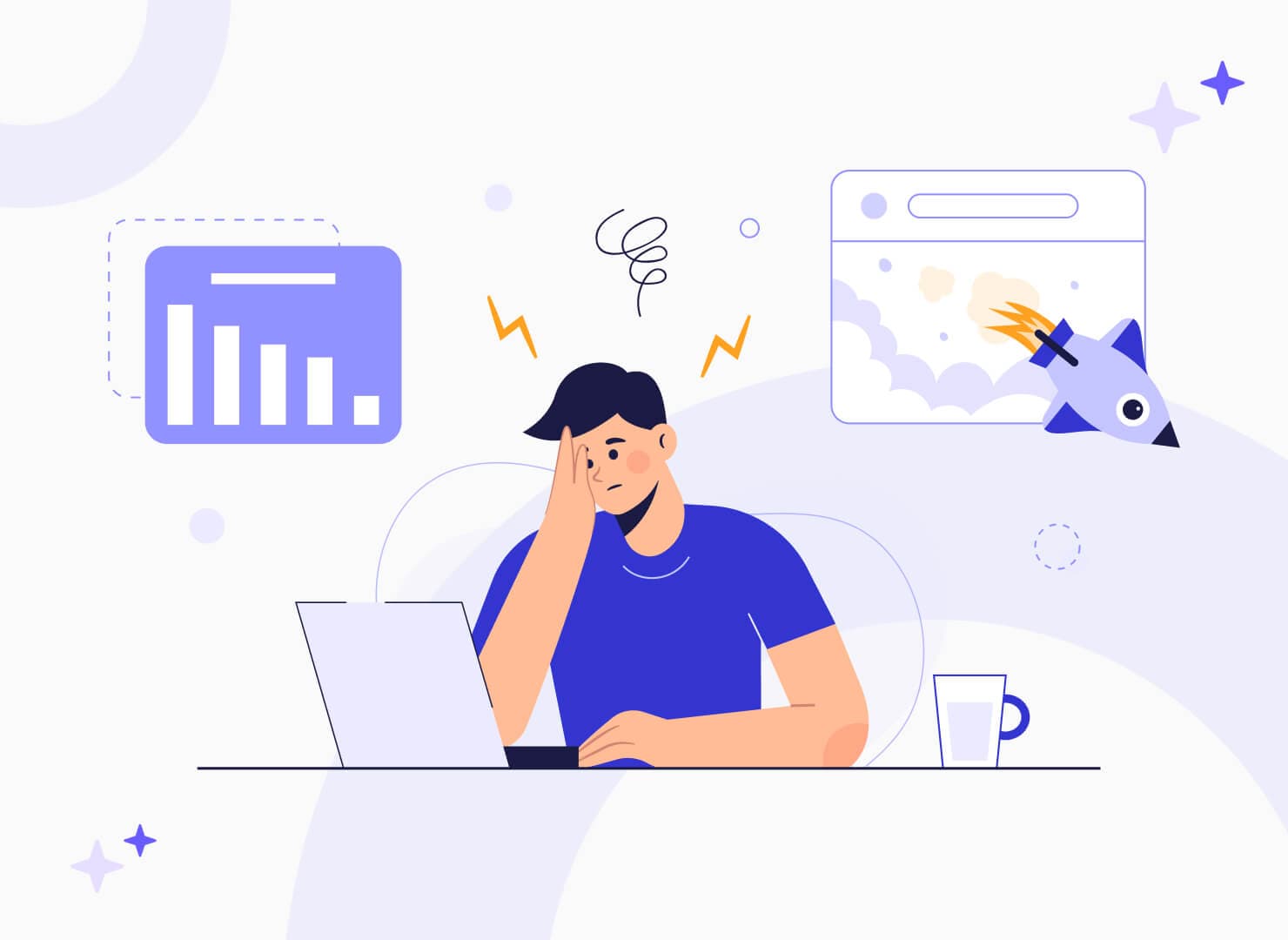


Project delays rarely happen overnight.
They build quietly — through overloaded team members, hidden dependencies, and small capacity gaps that no one notices in time.
By the time leadership realizes something is wrong, the deadline is already slipping.
And that’s the real problem: lack of visibility.
A project delay is rarely a surprise. It’s usually the result of a visibility gap that appeared weeks earlier.
In 2026, managing complex project portfolios without AI-driven monitoring is like flying a plane without radar. You might stay on course for a while — but eventually, you’ll hit turbulence you didn’t see coming.
Most organizations still manage resources through:
These methods create what many operations leaders call “operational fog.” No one truly knows:
Until something breaks.
Research continues to highlight how serious this issue is.
According to the Project Management Institute (PMI), only about 55% of projects are completed on time, meaning nearly half of all projects experience delays despite structured planning
Another industry analysis shows that only 34% of organizations consistently complete projects on time, highlighting how widespread schedule slippage has become across modern teams
At the same time, cost overruns average around 45% in large IT and transformation projects, showing how delays quickly translate into financial impact.
Put together, the pattern becomes clear:
Teams don’t fail because they lack talent. They fail because leaders can’t see resource risk early enough.
Legacy project management systems were designed to store tasks, not to analyze team capacity in real time.
That creates three critical problems.
Spreadsheets become obsolete the moment a task changes. By the time data is updated, the workload imbalance has already spread across the project.
A single overloaded engineer or designer can quietly block multiple deliverables. Without real-time monitoring, these bottlenecks stay hidden until deadlines collapse.
Instead of preventing delays, teams spend their time firefighting them. Status meetings become diagnosis sessions rather than decision-making moments.
The next generation of project management isn’t just about tracking tasks — it’s about understanding project health in real time.
AI-native platforms are introducing a new layer of intelligence that helps leaders see workload, risks in project, resource gaps, and execution bottlenecks before they impact delivery.
This is where platforms like Kroolo are redefining how teams manage complex project portfolios.
Instead of relying on manual planning and static updates, AI continuously analyzes tasks, documents, resources, and project data to keep execution aligned.
Here’s what that shift looks like in practice.
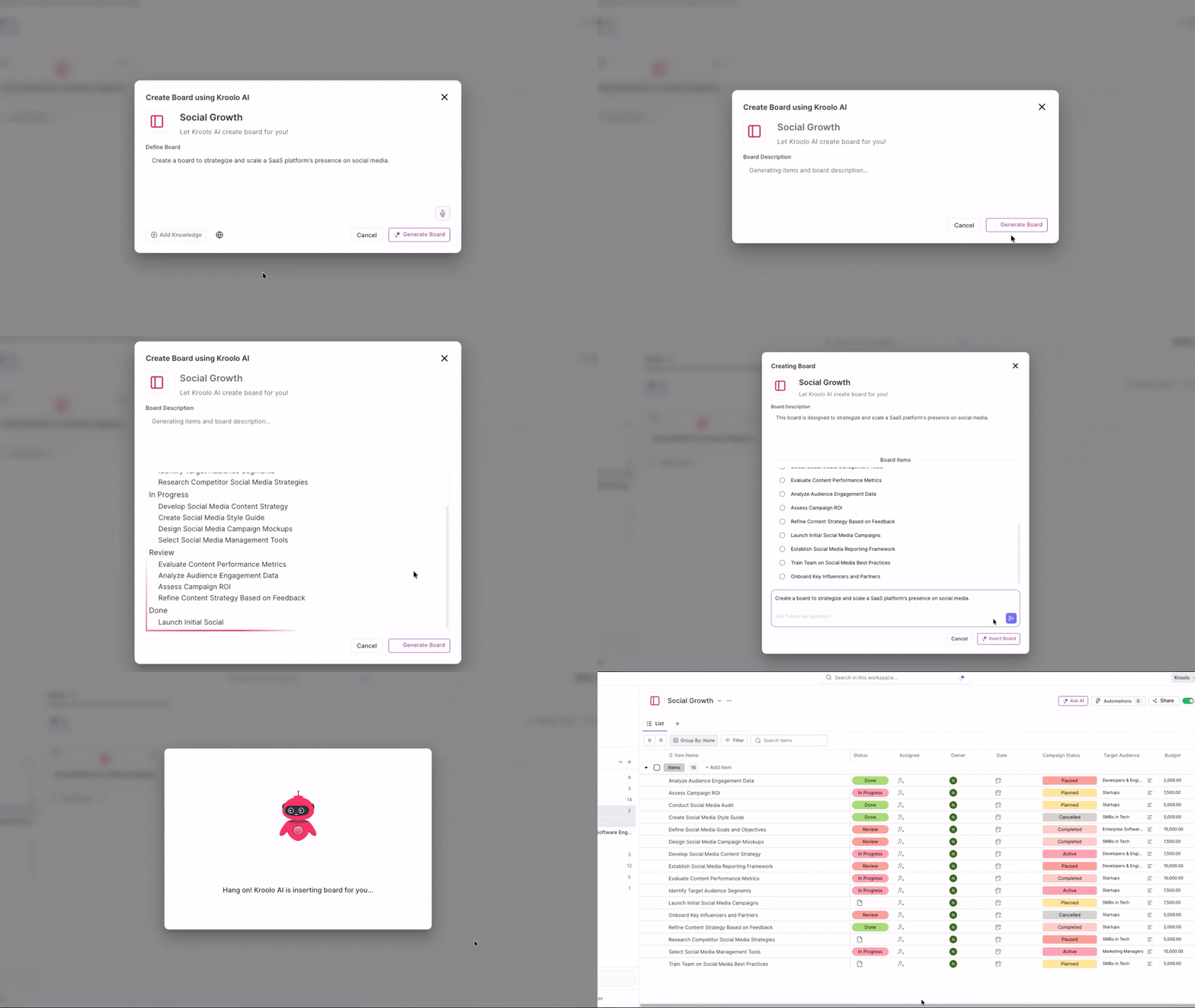
Many project delays start at the planning stage. When tasks are poorly structured or responsibilities are unclear, execution slows down and teams spend time reorganizing work.
AI-powered project planning solves this by allowing teams to create a full project board in seconds with AI-generated tasks aligned to the project objective.
This gives teams an execution-ready structure immediately. As the project evolves, the plan adapts in real time, ensuring resources stay aligned and workloads remain manageable — preventing planning gaps that often lead to delays later.
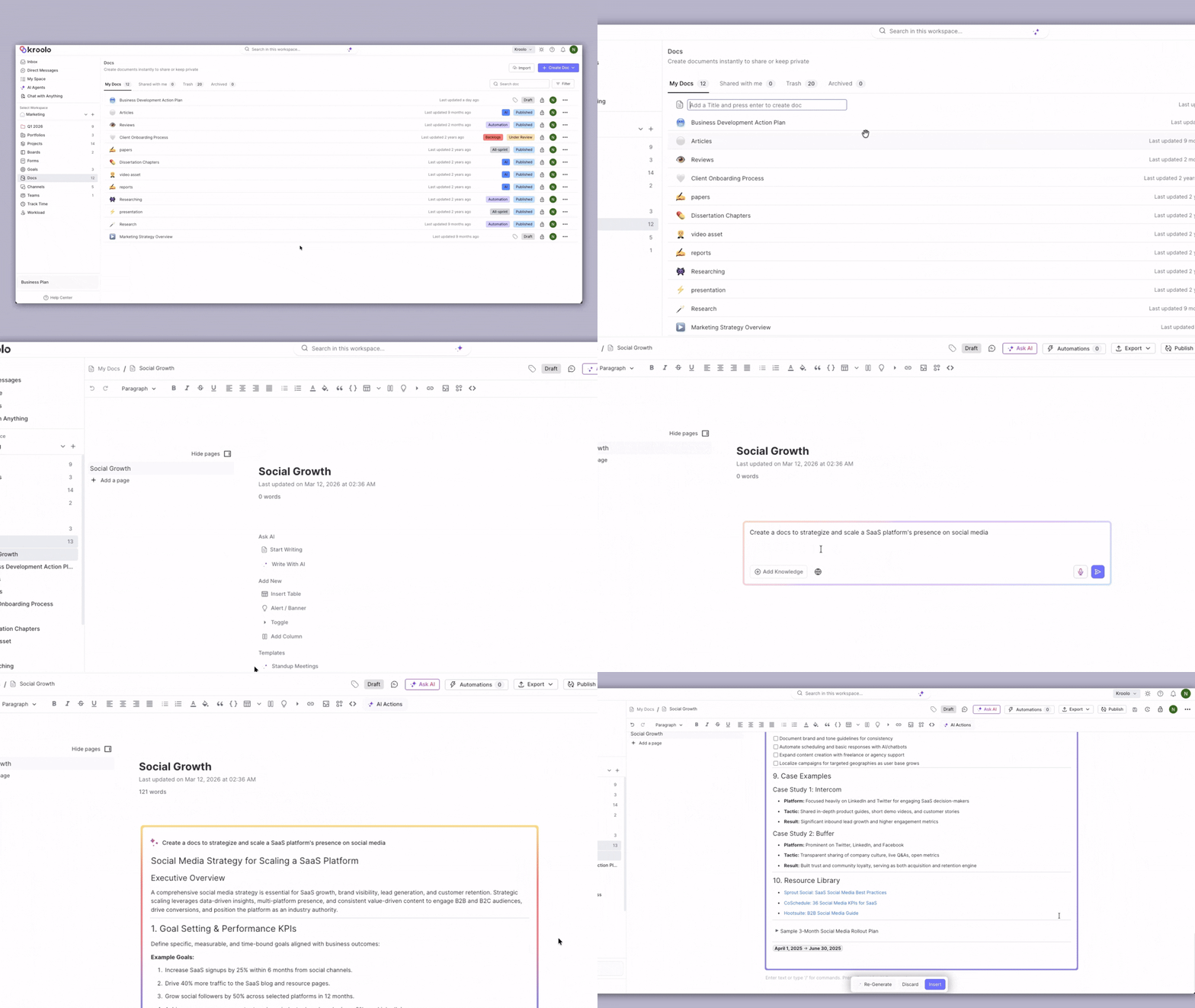
Miscommunication and outdated documentation are other common sources of delays.
AI-powered project documentation helps teams generate and maintain project documents automatically, ensuring consistency across requirements, plans, and updates.
Because documentation stays aligned with real-time project progress, teams avoid confusion, reduce rework, and keep execution moving forward without unnecessary interruptions.
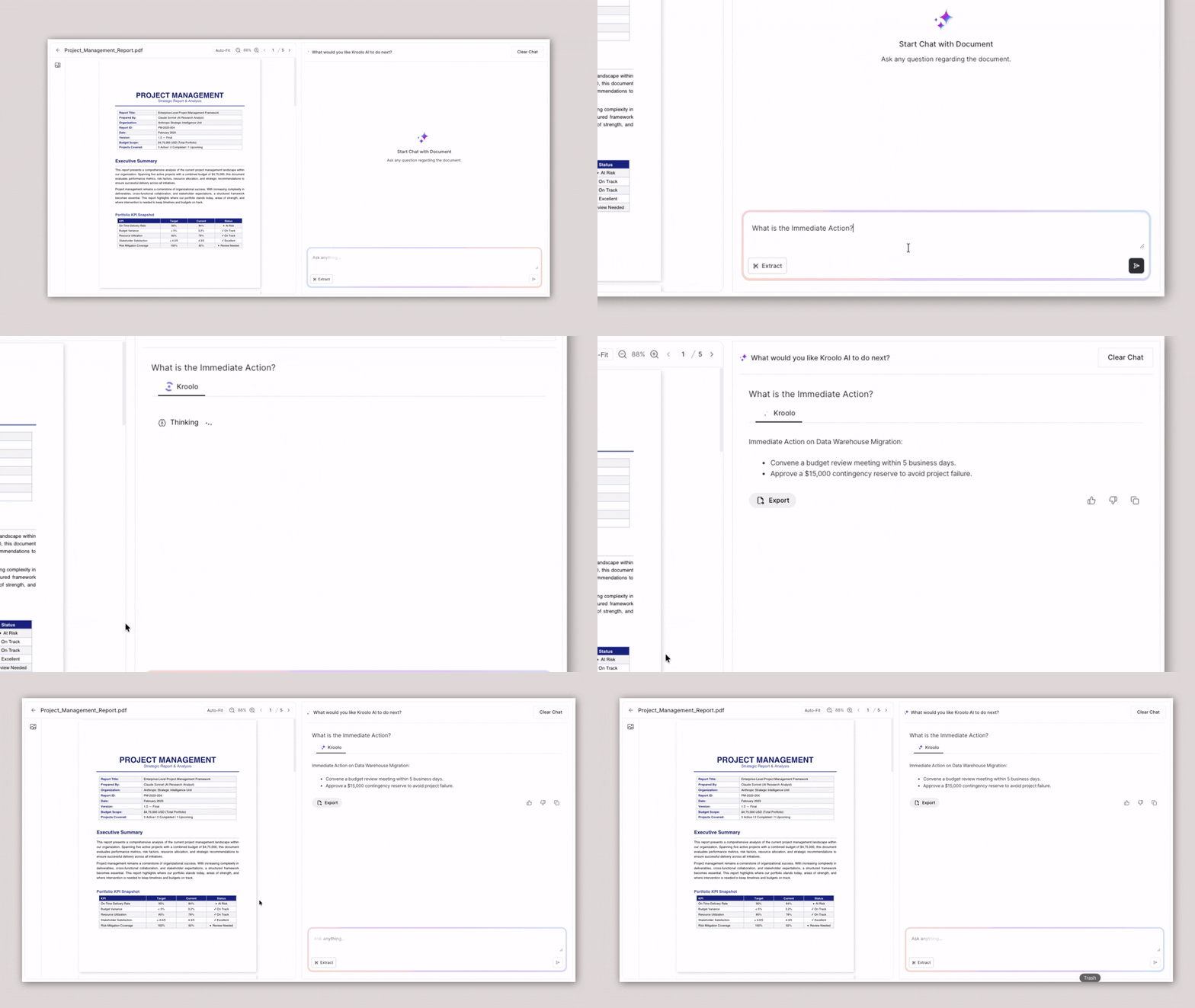
Teams often lose time searching for information buried inside documents, PDFs, or project files.
With AI-powered conversational access, you can simply chat with project resources - Word, PPT, PDF, Text file or any to get the answers you need.
Need a specific section from a brief?
Want to check a requirement in a PDF?
Instead of scanning through files manually, you can ask questions and extract the exact information instantly. This speeds up decision-making and helps teams resolve blockers faster.
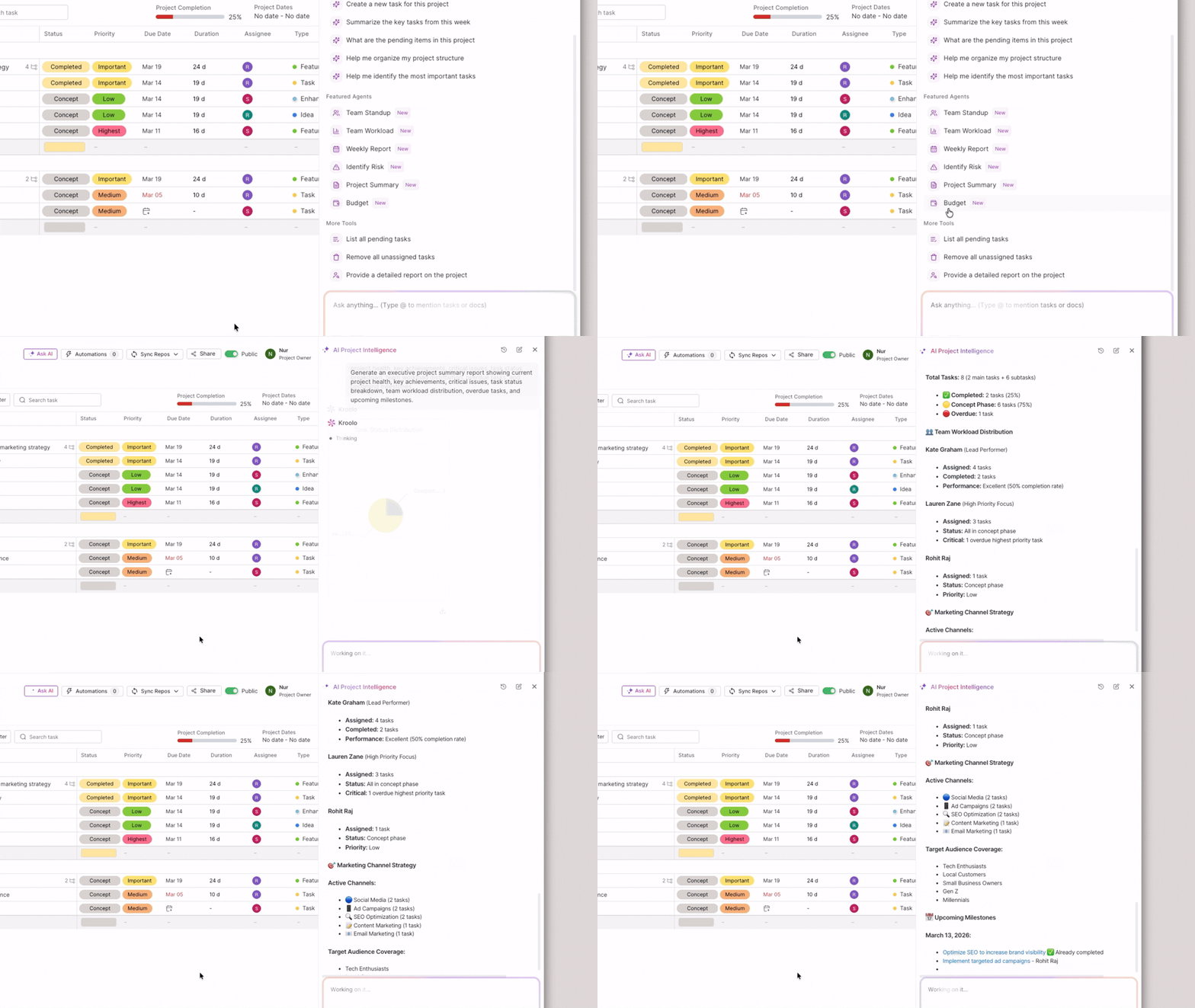
Traditional standups can be time-consuming and sometimes don’t reveal the full picture.
AI-powered standups change that by letting you ask questions directly to your project data and get structured answers instantly.
For example, you can:
Instead of manually preparing updates, teams get instant visibility into project health — helping them catch risks before they become delays.
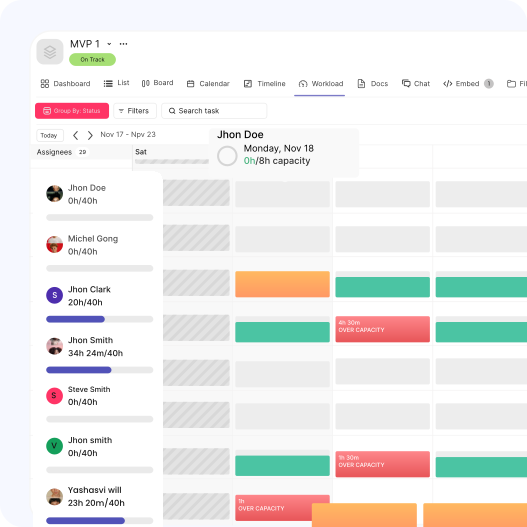
The biggest reason projects get delayed is surprisingly simple: workload imbalance.
Sometimes one team member ends up carrying too much work while others still have capacity. These hidden bottlenecks can quietly slow down the entire project.
AI-powered workload monitoring makes this visible immediately.
Leaders can:
This real-time visibility makes it much easier to rebalance work before things spiral into missed deadlines.

An Operations Lead is responsible for overseeing five concurrent projects across engineering and product teams. Each project has tight timelines, shared resources, and multiple dependencies.
Traditionally, the team relied on weekly status meetings and manual updates to track progress. But by the time a problem surfaced in these meetings, the impact on the timeline had often already begun.
The biggest challenge? Hidden resource bottlenecks.
During sprint planning, everything looked balanced on the surface. Tasks were assigned, timelines were set, and teams were ready to start execution.
But one critical issue was invisible.
A senior developer had been assigned three high-priority tasks across different projects. Because each task came from a separate project board, the overload wasn’t obvious in individual views.
If the sprint had started this way, the developer would have become a bottleneck — delaying multiple deliverables and potentially pushing the sprint timeline back by two weeks.
Using AI-powered workload tracking in Kroolo, the Operations Lead opened the workload view across projects.
The AI immediately highlighted the imbalance:
Instead of waiting for the delay to unfold, the system suggested a simple fix.
A sub-task was reassigned to the junior developer, redistributing the workload while keeping the senior developer focused on the most critical work.
This small adjustment prevented a major bottleneck before the sprint even began.
The team was able to:
Most importantly, the Operations Lead didn’t have to discover the issue during a status meeting.
The system surfaced the risk early — giving the team the opportunity to fix it before it became a delay.
Project delays often begin as small resource imbalances that go unnoticed.
With AI-powered workload monitoring, leaders can spot these bottlenecks early and rebalance work instantly — keeping projects on track before problems escalate.
Conclusion
The “Great Rationalization” of 2026 is forcing organizations to rethink the tools they rely on.
It’s no longer enough for a platform to simply store tasks or track progress. Modern teams need systems that actively help protect deadlines, balance workloads, and surface risks early.
That’s where AI resource monitoring becomes essential.
By continuously analyzing workload distribution, task dependencies, and project progress, AI gives leaders the visibility needed to catch bottlenecks before they slow down delivery.
In other words, organizations must move from manual oversight to proactive, AI-driven prevention.
As teams scale and portfolios grow more complex, this shift is what sustains a true Productivity Renaissance — where projects move faster, teams stay balanced, and deadlines stay protected.
“The First TRUE AI WorkOS is here.” Don’t let invisible bottlenecks sink your next big launch. Join the companies choosing proactive intelligence over reactive management.
Try Kroolo today. Sign up for free and experience the future of delay-free project execution.